- English
- Español
- Português
- русский
- Français
- 日本語
- Deutsch
- tiếng Việt
- Italiano
- Nederlands
- ภาษาไทย
- Polski
- 한국어
- Svenska
- magyar
- Malay
- বাংলা ভাষার
- Dansk
- Suomi
- हिन्दी
- Pilipino
- Türkçe
- Gaeilge
- العربية
- Indonesia
- Norsk
- تمل
- český
- ελληνικά
- український
- Javanese
- فارسی
- தமிழ்
- తెలుగు
- नेपाली
- Burmese
- български
- ລາວ
- Latine
- Қазақша
- Euskal
- Azərbaycan
- Slovenský jazyk
- Македонски
- Lietuvos
- Eesti Keel
- Română
- Slovenski
- मराठी
- Srpski језик

Things That Are Easily Overlooked! Will a Smart Gas Alarm Lose Data if It Loses Power?
In industries such as environmental protection, chemical engineering, and metallurgy, the gas concentration and alarm records stored by intelligent gas detectors are crucial for safety traceability and equipment maintenance. Many users worry that this critical data might be lost in the event of a sudden power outage. In fact, most qualified intelligent gas detectors have power outage data protection designs, making data loss unlikely under normal circumstances. However, there are exceptions. Let's take a look at some of these exceptions with the help of Zechuan Technology Electronics.
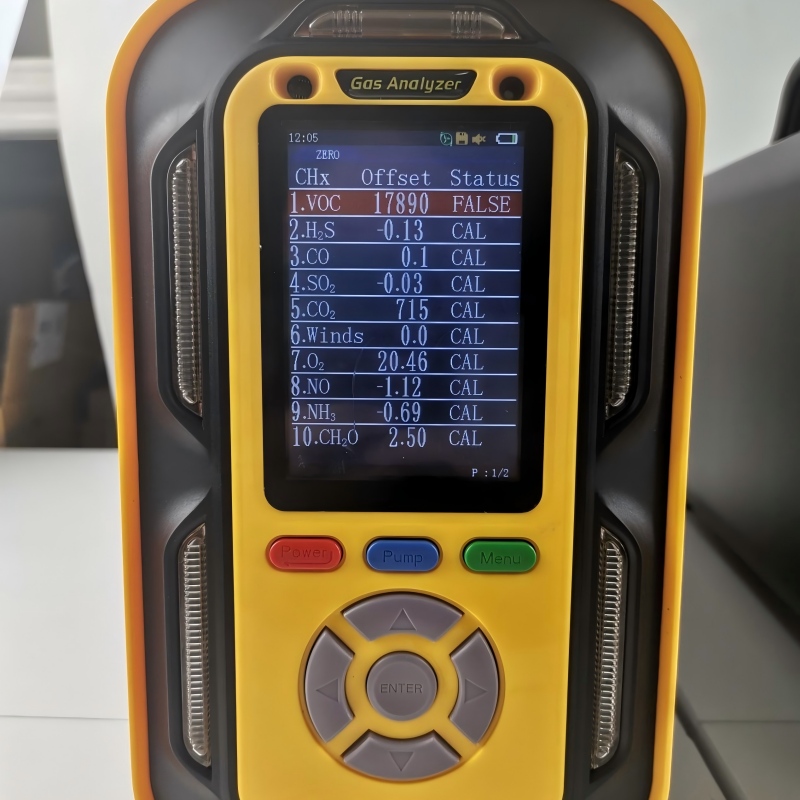
I. Under Normal Circumstances: Core Data Is Generally Not Lost
Mainstream smart gas alarms consider power failure protection requirements in both hardware and software. On the hardware side, the device is equipped with an energy storage capacitor or backup battery. When the main power is disconnected, the energy storage capacitor can quickly release energy, or the backup battery will automatically start, providing temporary power support. This time is sufficient to complete the transfer of critical data. For storage, the device mostly uses non-volatile memory. This type of memory can retain data without continuous power supply. Even in the event of a power failure, stored core information such as historical concentrations, alarm threshold settings, and calibration records can be stably preserved. On the software side, a high-priority program prioritizes shutting down irrelevant functions the moment a power failure is detected, focusing on completing data writing, further reducing the risk of data loss.
II. Key Design Elements for Preventing Data Loss
Power failure detection and response are fundamental to gas alarms. The device's built-in voltage monitoring component monitors the power supply voltage in real time. When the voltage drops below a safe level, it quickly triggers a protection program, resulting in a rapid response. The energy storage component's capacity is also precisely matched to ensure it can support data write operations. Data storage is also optimized. Gas alarms typically only store critical data to reduce write operations and use verification mechanisms to ensure data integrity. Some high-end devices employ dual backup storage, storing data in two separate areas. Even if one area fails, data can be recovered from the other.
III. Special Circumstances That May Lead to Data Loss
Problems may occur due to design flaws or insufficient quality in the equipment itself. For example, if the gas alarm's energy storage capacitor has insufficient capacity, its power failure detection response is slow, or it uses inferior memory, data saving may fail due to insufficient power or slow write speed during a power outage. Improper human operation can also have an impact; frequent forced power outages or sudden power outages during data writing may interfere with the storage process and cause data corruption. After long-term use, the performance of the energy storage capacitor deteriorates, and the memory ages, which will also reduce the reliability of data storage. In extreme cases, strong electromagnetic interference or physical damage may also lead to data loss.
IV. Recommendations for Daily Data Protection
Prioritize gas alarm products with robust power-off protection designs, paying attention to whether they employ high-speed memory and sufficient energy storage components. Avoid frequent power plugging and unplugging during use; disconnect the power whenever possible when the device is in standby mode. Regularly maintain the device, checking the backup battery level and clearing redundant data to prevent storage space from being full and affecting the retention of new data. Additionally, periodically export data via USB or wireless function to back it up to a computer or cloud for double protection. If data anomalies are detected, first check the memory status; contact the manufacturer for testing and repair if necessary.
In conclusion, we can see that core data from intelligent gas alarms is generally not lost after a power outage, thanks to the device's power failure detection, temporary energy storage, and non-volatile storage design. However, for added security, it's still necessary to monitor device quality, operate the device correctly, perform routine maintenance, and back up data when necessary to ensure the device always maintains reliable data recording capabilities.