- English
- Español
- Português
- русский
- Français
- 日本語
- Deutsch
- tiếng Việt
- Italiano
- Nederlands
- ภาษาไทย
- Polski
- 한국어
- Svenska
- magyar
- Malay
- বাংলা ভাষার
- Dansk
- Suomi
- हिन्दी
- Pilipino
- Türkçe
- Gaeilge
- العربية
- Indonesia
- Norsk
- تمل
- český
- ελληνικά
- український
- Javanese
- فارسی
- தமிழ்
- తెలుగు
- नेपाली
- Burmese
- български
- ລາວ
- Latine
- Қазақша
- Euskal
- Azərbaycan
- Slovenský jazyk
- Македонски
- Lietuvos
- Eesti Keel
- Română
- Slovenski
- मराठी
- Srpski језик

Gas Knowledge Q&A! Can a Carbon Monoxide Detector Work in Standby Mode Indefinitely?
Carbon monoxide is colorless and odorless, making leaks easily overlooked. Continuous monitoring by a detector is crucial for safety. Many people wonder if carbon monoxide detectors can remain in standby mode indefinitely to ensure safety. While most carbon monoxide detectors support long-term standby operation, there are limitations. These limitations depend on the device type, power supply, and operating environment. The key is to meet monitoring needs while minimizing equipment wear and tear. Zetron Technology has provided an analysis; let's take a look.
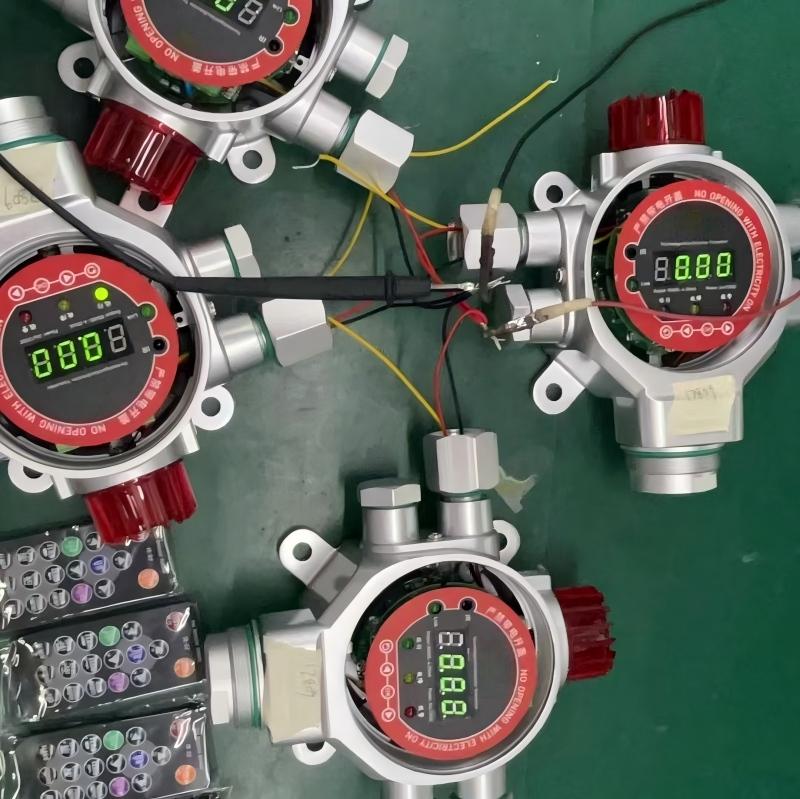
I. Different Equipment Types Have Different Standby Capacities
Fixed carbon monoxide detectors are designed for continuous monitoring and mostly use mains power, with some equipped with backup batteries. As long as they are installed correctly and the power supply is stable, they can operate in standby mode for extended periods, making them suitable for scenarios requiring continuous monitoring, such as kitchens and boiler rooms. Portable detectors are primarily battery-powered, and their standby time is greatly affected by battery capacity. On a full charge, ordinary portable devices can operate continuously for several hours to tens of hours, with some long-life models supporting even longer periods. However, they cannot operate continuously without interruption like fixed detectors and are more suitable for temporary inspections or mobile monitoring scenarios.
II. Key Factors Affecting Standby Operation
Power supply stability is fundamental. Frequent power outages will interrupt standby operation for stationary carbon monoxide detectors. Portable devices experience battery performance degradation over time, significantly shortening battery life and reducing standby time.
Environmental conditions also have an impact. High temperatures, high humidity, or dusty environments exacerbate equipment wear and tear, potentially shortening continuous standby time and affecting sensor sensitivity, indirectly reducing operational stability.
The condition of the carbon monoxide detector itself is crucial. Sensor aging and internal component wear make the device more prone to malfunctions during standby operation, unable to maintain stable operation. Equipment that is not maintained for a long time will also have reduced reliability in standby operation.
III. Key Points for Long-Term Standby Operation
Regularly check the power supply. For stationary carbon monoxide detectors, ensure the power line is functioning properly and test the backup battery's performance periodically. For portable devices, charge or replace batteries promptly to prevent monitoring interruptions due to depletion of power.
Perform routine maintenance. Regularly clean the surface of the carbon monoxide detector to prevent dust from clogging the sensor. Calibrate the sensor as required to maintain detection accuracy and reduce the likelihood of equipment malfunction and shutdown.
Select equipment appropriately based on the scenario. For scenarios requiring continuous monitoring, prioritize stationary detectors. For temporary use or mobile monitoring, portable devices are sufficient; avoid forcing them into prolonged standby to prevent excessive wear and tear on the battery and sensor.
In summary, carbon monoxide detectors can operate continuously for extended periods depending on their type and usage requirements. Fixed detectors are better suited for uninterrupted monitoring, while portable detectors require careful consideration of battery life. The key is to ensure a stable power supply, perform regular maintenance, and select the appropriate device based on the usage scenario. This will meet safety monitoring needs while minimizing equipment wear and tear and extending its lifespan. For continuous indoor safety monitoring, fixed detectors are a more reliable choice; for temporary inspections, portable devices can be charged as needed.