- English
- Español
- Português
- русский
- Français
- 日本語
- Deutsch
- tiếng Việt
- Italiano
- Nederlands
- ภาษาไทย
- Polski
- 한국어
- Svenska
- magyar
- Malay
- বাংলা ভাষার
- Dansk
- Suomi
- हिन्दी
- Pilipino
- Türkçe
- Gaeilge
- العربية
- Indonesia
- Norsk
- تمل
- český
- ελληνικά
- український
- Javanese
- فارسی
- தமிழ்
- తెలుగు
- नेपाली
- Burmese
- български
- ລາວ
- Latine
- Қазақша
- Euskal
- Azərbaycan
- Slovenský jazyk
- Македонски
- Lietuvos
- Eesti Keel
- Română
- Slovenski
- मराठी
- Srpski језик

Can Combustible Gas Detectors Malfunction if They Get Wet?
When using combustible gas detectors in high-humidity environments such as basements, many people worry about the equipment being affected by moisture. As a critical piece of equipment for ensuring gas safety, its working condition directly relates to environmental safety. So, will it malfunction after being exposed to moisture? Let's find out with the help of Zetron Technology's editor.
In fact, combustible gas detectors are quite sensitive to humidity, and are prone to functional abnormalities after being exposed to moisture. In severe cases, they may even fail completely. The specific effects and countermeasures can be understood from the following aspects.
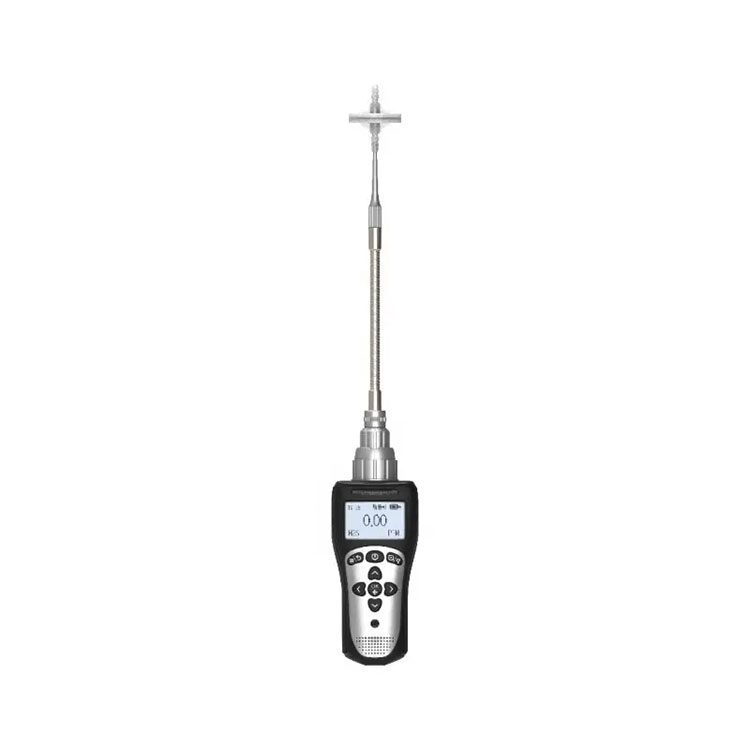
I. How much does moisture affect the core components?
The core working component of a combustible gas detector is the gas sensor. These components need to be in a dry and clean environment to accurately detect combustible gas concentrations. Once moisture penetrates the device, it will adhere to the surface of the sensor's sensing element, hindering the contact between gas molecules and the sensing element, leading to deviations in detection data, value drift, or even the inability to accurately identify combustible gases.
Besides the sensor, the circuit board inside the device is also susceptible to moisture. Moisture can damage the circuit connections on the circuit board, potentially causing short circuits or poor contact, leading to abnormal display, failure of the alarm function, and in extreme cases, even the inability to power on the device. If exposed to a humid environment for a long time, moisture will also accelerate the oxidation and corrosion of internal components, shortening the service life of the equipment.
II. What are the different manifestations and countermeasures after exposure to moisture?
In cases of mild moisture exposure, the device may only experience a temporary decrease in sensitivity or occasional false alarms. In this case, the combustible gas detector should be moved to a cool and well-ventilated place to air dry naturally. After drying, restart the device and test it. Some devices may recover normal function.
If the device is severely exposed to moisture, such as being submerged in water or being in a high-humidity environment for a long time, the internal components may have suffered irreversible damage. In this case, simply air drying is usually not enough to solve the problem. It is necessary to contact professional after-sales personnel for repair. If the damage is severe, a new device needs to be replaced to avoid continuing to use a faulty device and leaving safety hazards.
III. What are the daily moisture-proof usage suggestions?
In daily use, try to avoid installing the combustible gas detector in areas with high humidity. When cleaning the device, do not rinse it directly with water. Use a dry, soft cloth to gently wipe away surface dust. If the environment itself has high humidity, you can appropriately increase ventilation to reduce environmental humidity and minimize the impact of moisture on the equipment.
IV. Special Installation Considerations for Basements
Basements generally have high humidity and poor ventilation, making them a high-risk area for combustible gas detectors to be affected by moisture. Therefore, extra attention must be paid to moisture protection during installation. First, choose equipment models suitable for humid environments, prioritizing alarm systems with moisture-proof sealing designs to reduce the possibility of moisture penetration.
The installation location should avoid low-lying areas and areas prone to water accumulation in the basement. Choose a location high on the wall and near a ventilation opening whenever possible. This facilitates gas diffusion and detection, and also reduces the impact of moisture accumulation on the equipment.
At the same time, regularly check the sealing performance of the equipment, and check whether the connections of the casing are tight. If the sealing strips are found to be aging or damaged, replace them promptly. In addition, small dehumidifiers can be used to improve the humidity environment in the basement and further reduce the risk of equipment damage due to moisture.
In general, combustible gas detectors are indeed susceptible to moisture, and moisture can cause functional abnormalities or even failure. Taking proper moisture-proof measures daily can effectively reduce the occurrence of such malfunctions. If the equipment malfunctions due to moisture, it should be dealt with promptly or maintenance should be contacted to ensure that the equipment remains in normal working condition and can better perform its safety protection function.