- English
- Español
- Português
- русский
- Français
- 日本語
- Deutsch
- tiếng Việt
- Italiano
- Nederlands
- ภาษาไทย
- Polski
- 한국어
- Svenska
- magyar
- Malay
- বাংলা ভাষার
- Dansk
- Suomi
- हिन्दी
- Pilipino
- Türkçe
- Gaeilge
- العربية
- Indonesia
- Norsk
- تمل
- český
- ελληνικά
- український
- Javanese
- فارسی
- தமிழ்
- తెలుగు
- नेपाली
- Burmese
- български
- ລາວ
- Latine
- Қазақша
- Euskal
- Azərbaycan
- Slovenský jazyk
- Македонски
- Lietuvos
- Eesti Keel
- Română
- Slovenski
- मराठी
- Srpski језик

For Detecting Benzene Gas in Confined Spaces, Should a Portable or a Fixed Gas Detector Be Used?
Benzene is a toxic gas, and in enclosed spaces with poor ventilation, it can easily accumulate. Detection work is directly related to the safety of personnel. Many people struggle when choosing detection equipment, wondering whether to use a portable or fixed toxic gas detector. Did you know that there's no absolute advantage or disadvantage to either type? Why is that? Below, the editor from Zetron Technology will provide a detailed analysis from key dimensions to help you clarify your decision-making process.
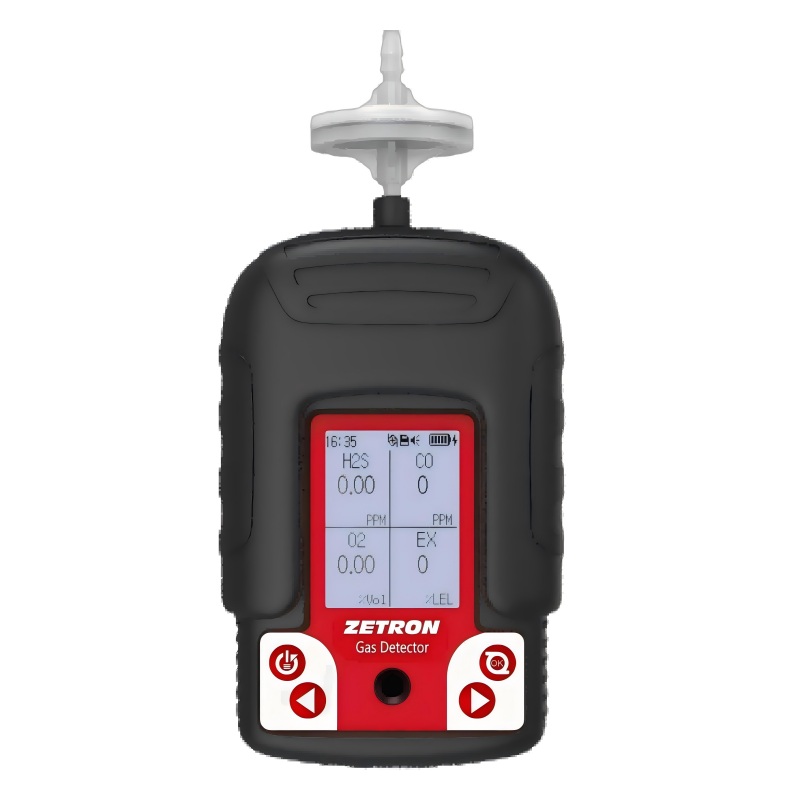
I. Portable Detectors – Suitable for Short-Term, Flexible Operations
Portable toxic gas detectors are more suitable for short-term, temporary operations in confined spaces, such as underground pipeline maintenance, temporary inspections of small storage tanks, and intermittent laboratory work. In these scenarios, the work time is short and the workspace is highly mobile, making the compact and portable nature of portable toxic gas detectors a significant advantage. They can flexibly move with the operator, providing real-time feedback on benzene concentration in the surrounding environment. This is especially suitable for situations involving entry into confined spaces, allowing for the detection of localized concentration changes and timely alarm notifications.
Furthermore, portable devices are easy to install, requiring no complex wiring, and can be used immediately after unpacking. They can also quickly respond to temporary and unexpected detection needs, and are relatively easy to maintain and store.
II. Fixed Gas Detectors – Suitable for Long-Term Continuous Monitoring
Fixed toxic gas detectors are more suitable for enclosed spaces with long-term fixed operations, such as chemical workshops, fixed storage tanks, underground machine rooms, and areas surrounding continuously operating reactors in enclosed or semi-enclosed spaces. These scenarios require uninterrupted monitoring of benzene concentration, and fixed devices can meet the needs of continuous monitoring.
They are usually installed at key points where benzene gas is likely to leak, and are connected to the power supply system and alarm device via wiring, enabling 24/7 real-time monitoring. Once the concentration exceeds the limit, an audible and visual alarm is triggered immediately. Some toxic gas detector models also support remote data transmission, facilitating centralized management by personnel. Furthermore, fixed devices offer superior battery life and stability, making them suitable for long-term, high-intensity operation and providing continuous safety protection for enclosed spaces with long-term operations.
III. Key Selection Considerations
When choosing a toxic gas detector, three aspects should be considered. First, consider the work cycle: portable detectors are preferred for short-term, temporary work, while fixed detectors are more suitable for long-term, fixed operations. Second, consider the monitoring range: if multiple points within a confined space need to be monitored, a portable detector is more appropriate.
If only a fixed leak point or the overall concentration of the space needs to be monitored, a fixed detector will suffice. Finally, consider management needs: if remote monitoring, data traceability, and centralized management are required, fixed equipment is more suitable. If flexibility, convenience, and rapid response are desired, a portable detector would be a better choice.
In general, when detecting benzene gas in confined spaces, the equipment type should be matched to the work mode and monitoring needs. Short-term, temporary work relies on the flexibility of portable toxic gas detectors, while long-term, fixed work requires continuous protection from fixed equipment. In practical applications, both types of equipment can be used in combination according to the scene requirements to further enhance the safety of benzene gas detection in confined spaces.